Free learner driver handbook · Vol. 01 (2026)
The Golden Road Precision Guide
The techniques, diagrams and test-day know-how we teach every Golden Road learner, now free online. Read it before your first lesson in Perth and spend more of your lesson time actually driving.
Welcome to the driver’s seat
You’re not just learning to pass a test.
Thank you for choosing Golden Road Driving Academy. You are learning a skill for life. This guide is our Golden Road Blueprint: the essential techniques, diagrams and procedures that set safe drivers apart from the rest.
The more you understand the theory before you step into the car, the more time we can spend driving, and the faster you will reach your goal. Let’s get to work.
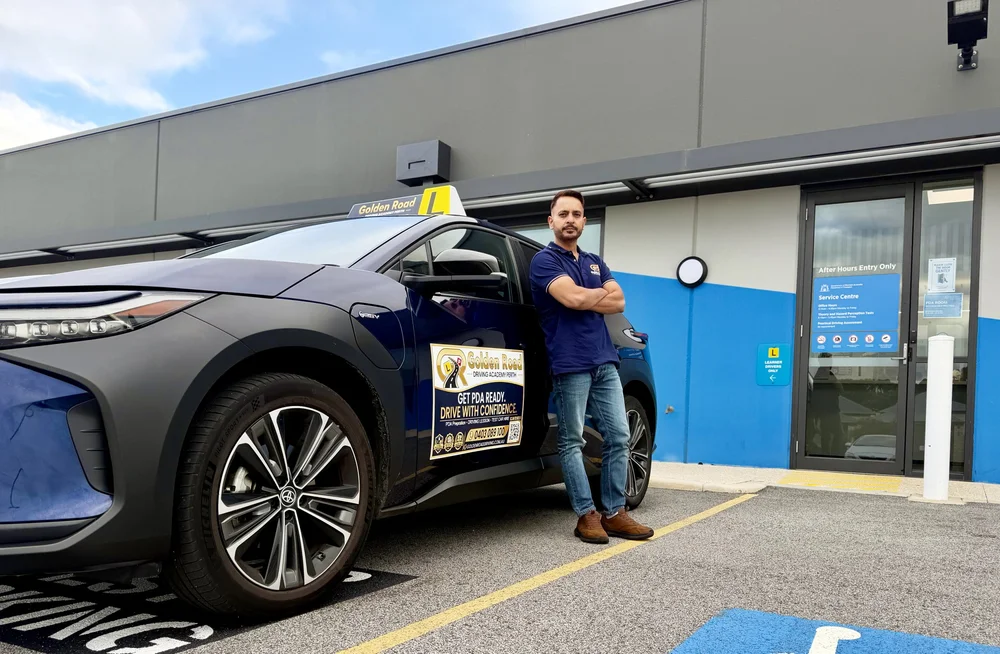
Paul SinghFounder & Head Instructor, Golden Road Driving Academy
01Know your vehicle
Before you drive: the cockpit drill
Every drive starts the same way, before the car moves. Do it in this order and it soon becomes habit.
Doors closed
All doors shut and locked before you start.
Seat & headrest
Reach the pedals with a slight bend in your knee; headrest level with the back of your head.
Mirrors set
Centre mirror shows the whole rear window; side mirrors just show the edge of your car.
Seatbelt on
Driving without one is an automatic PDA fail, and the law.
The dashboard talks to you
- Speedometer: how fast you’re going, in km/h. Glance at it often.
- Tachometer (RPM): how hard the engine is working.
- Fuel gauge: never start a lesson or a test on empty.
Green or blue light: info
A system is on, like headlights or indicators.
Amber light: caution
Something needs checking soon, like low fuel or the engine light.
Red light: stop safely
Pull over when safe and don’t keep driving. Check the owner’s manual.
02The Golden Sequence
MIB: Mirrors, Indicate, Blind spot
Our most important routine. Do it every time you change position on the road, in this order, until you do it without thinking.
- 1MirrorsCentre mirror, then the side mirror on the side you’re moving to.
- 2IndicateSignal your intention early, so others know what you’re about to do.
- 3Blind spotA quick head check over your shoulder (chin to shoulder) before you move.
When to use MIB
What is a blind spot? The areas beside and behind your car that your mirrors can’t show. Only a physical head check tells you they’re clear. When moving off from the kerb, indicate for at least 5 seconds first.
03Vehicle control
Steering techniques: what’s safe and what’s not
Assessors watch your hands. Smooth, controlled steering keeps the car on the right path and keeps you ready to react.
Push-pull (general driving)
Smooth adjustments where your hands never cross. Best for most situations.
Hand-over-hand (tight turns & parking)
For slow manoeuvres and sharp turns only, like parking or a U-turn.
Palming (“washing dishes”)
Turning the wheel with a flat palm. No grip, no control.
Underhand grip
Hands hooked under the wheel. Dangerous if the airbag goes off.
Lazy hands
One hand at the top or both hands resting low. Slow to react in an emergency.
04Roundabout lab
Roundabout signals, one exit at a time
In Australia we drive on the left, so traffic goes clockwise around the roundabout. Always give way to vehicles already on the roundabout. These examples show a single-lane, four-exit roundabout. Tap an exit to see the path.
Turning left: first exit
- On approach: signal LEFT
- Give way to traffic already on the roundabout.
- Keep signalling LEFT until you’ve exited.
Going straight ahead: second exit
- On approach: NO SIGNAL before entering.
- Give way to traffic already on the roundabout.
- Just before your exit: signal LEFT
Turning right: third exit
- On approach: signal RIGHT
- Give way to traffic already on the roundabout, then go around the island.
- Just before your exit: change to LEFT
Making a U-turn: fourth exit
- On approach: signal RIGHT
- Give way, then go all the way around the island (unless a sign says no U-turn).
- Just before your exit: change to LEFT
Golden rule: always signal LEFT just before you exit the roundabout.
Want more on WA roundabouts and give-way rules? Read WA road rules learners get wrong.
05Manoeuvres
Bay parking, step by step
Go slowly, keep checking all around, and remember: you’re allowed to correct. The reference points below suit most small cars; your instructor will fine-tune them in our car.
Forward bay parking
- Keep your car wide to the left. Indicate right. Line up your right side mirror with the first line of your target bay.
- Check your right blind spot. Steer full lock right straight away and drive slowly into the bay.
- Watch the bay lines. When the car is straight (parallel to the lines), straighten the wheel (about 1.5 turns left). Move forward carefully and secure the car.
Pro tip, the correction: turned too early and too close to the line? Don’t force it. Stop, reverse straight back to make space, then drive forward again to fix the angle.
Reverse bay parking
- Position. Drive slowly along the aisle and stop when you’re just past your target bay.
- The angle. Steer away from the bay and move forward until the car sits at about 45° to the bays.
- Reverse and straighten. Check all around, then reverse slowly, steering towards the bay. As the car becomes parallel to the lines, straighten the wheel.
- Secure. Stop inside the lines, select Park and apply the handbrake.
Pro tip, the correction: getting too close to a line on one side? Stop, drive forward slightly to straighten up, and reverse back in. You are allowed to adjust!
06Who goes first?
STOP signs and right turns at green lights
The golden rule: a STOP sign is not a suggestion. Come to a complete stop behind the line, then give way to all vehicles approaching from the left or right. But what if there’s a car opposite you?
You turn right, they go straight
You’re both at STOP signs. You want to turn right; the car opposite wants to go straight.
The car going straight goes first. You’re crossing their path, so wait until they’ve cleared the intersection.
You turn right, they turn left
You’re both at STOP signs. You want to turn right; the car opposite wants to turn left into the same road.
The car turning left goes first. When turning right, you always give way to oncoming traffic, whether it’s going straight or turning left.
The “filter turn”: turning right on a green circle
A green circle means “go, but only if safe.” It does not give you priority over oncoming traffic.
- Enter the intersection. Move forward slowly past the stop line and wait near the middle, with your wheels straight.
- Wait and give way to oncoming traffic going straight, oncoming traffic turning left, and pedestrians crossing the road you’re turning into.
- Turn when there’s a safe gap in oncoming traffic.
- If the light turns yellow while you’re waiting in the middle and oncoming traffic stops, complete your turn as soon as it’s safe. Don’t stay in the middle.
07Understanding your PDA
The 7 key skills your assessor is looking for
Transport WA scores your Practical Driving Assessment (PDA) on these 7 skills. Here’s what good and poor look like for each one.
1. Flow
Can you combine driving skills smoothly without pausing to think about what to do next?
GoodYou check a roundabout early, see it’s clear and continue smoothly without an unnecessary stop.
PoorSlowing too much at a green light, hesitating, then speeding up. Stopping at a Give Way sign with no cars around.
“Plan ahead, don’t hesitate.”
2. Movement
Is the car stable? Do you speed up and slow down smoothly?
GoodBraking gently and early so the car doesn’t nose-dive. Accelerating smoothly away from lights.
PoorJerky braking, taking off too fast, or rolling back on a hill start.
“Treat the pedals like they’re made of glass.”
3. Path
Do you pick the best track and stay in it?
GoodStaying in the centre of your lane. Turning right close to the centre line without cutting the corner.
PoorDriving too close to parked cars (the door zone), cutting corners, or swinging wide over the lines.
“Own your lane. Don’t cut corners.”
4. Look behind
Do you know what’s behind you before you change speed or direction?
GoodChecking the rear-view mirror before you brake. A chin-to-shoulder head check before merging.
PoorBraking hard for a turn without checking for a tailgater. Changing lanes without a head check.
“Mirrors before brakes. Head check before steering.”
5. Signal
Do you tell other drivers what you’re doing early enough?
GoodIndicating for at least 5 seconds before leaving the kerb, and about 30 metres (roughly 3 house blocks) before a turn.
PoorFlicking the indicator on as you turn the wheel. Forgetting to cancel it after a lane change.
“Don’t keep secrets. Tell everyone where you’re going.”
6. Responsiveness
Do you spot hazards around you early and respond to them in the right way?
GoodSeeing a child near parked cars and easing off, covering the brake. Leaving more space when the car ahead brakes or the road is wet.
PoorReacting late to a pedestrian or brake lights ahead and braking hard. Driving at the same speed past a hazard as if it isn’t there.
“See it early, act early.”
7. Vehicle management
Do you use the car’s controls correctly and keep an eye on your instruments while you drive?
GoodSelecting Park, Drive and Reverse with your foot on the brake. Checking your speedometer often. Using lights and wipers when needed, and push-pull steering.
PoorRolling while changing gear, forgetting the handbrake, or not noticing your speed creeping up. (In a manual car this also covers clutch and gear changes.)
“Know your car. Control your car.”
The 7 assessment items in depth
Read our full guide to what your WA driving examiner is actually scoring, with more examples.
08Test day
On the day of your PDA
The PDA takes about 35 to 50 minutes and has 5 sections: in 3 you follow the assessor’s directions, and in 2 you do set exercises.
Bring and do
- Your completed logbook, signed by you and your supervising driver (not needed if you’re 25 or older).
- Your learner’s permit (preferred) or Category B identification.
- A licensed, roadworthy car. The assessor checks it first; if it’s unsuitable, the test is cancelled.
- Arrive 15 minutes early. Late means cancelled, and you pay to rebook.
- Wear comfortable, practical clothes and enclosed shoes.
- Pass in an automatic and your licence is restricted to automatic cars.
No car for the test? Use our dual-control car with a test day package.
Automatic fail items
You will fail the PDA straight away if you:
- need the assessor to step in to avoid danger
- disobey a regulatory sign, or speed
- break a traffic rule in a way that threatens safety
- drive without a seatbelt
- cause a crisis, or fail to respond to one an experienced driver would see coming
- start the car while not in full control of it
- refuse, or can’t do, any part of an exercise, or refuse a reasonable direction
Pass: you get your provisional licence (P plates). Fail: you wait at least 7 days to rebook and pay again. Failed recently? Get your result sheet explained free.
Are you test ready?
The independence check. Tick each one you can honestly do on your own, without prompting.
0 of 5 ticked. Not ticking every box yet? That’s what lessons are for.
We can help you close the gap
A mock driving test shows exactly where you stand, with a written report. A test-ready bundle gets you over the line.
Knowledge check
Would you make the right call?
8 quick questions from this guide. You’ll see why after each answer.
Real students. Real results.
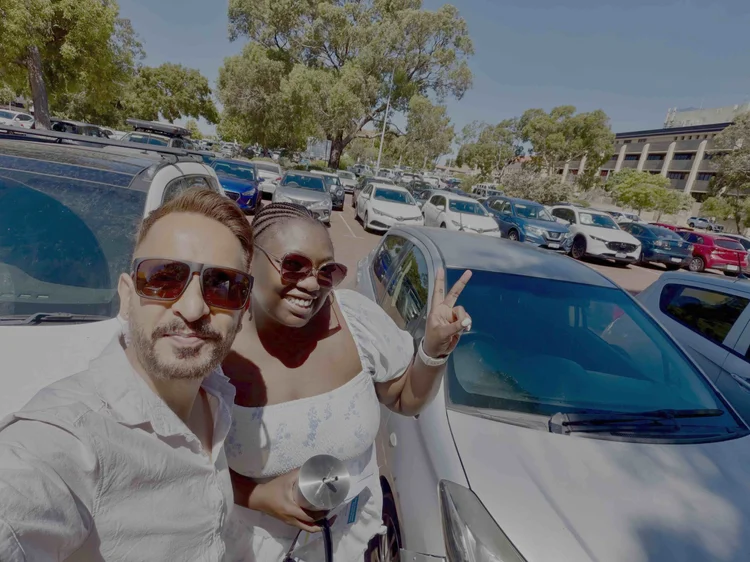
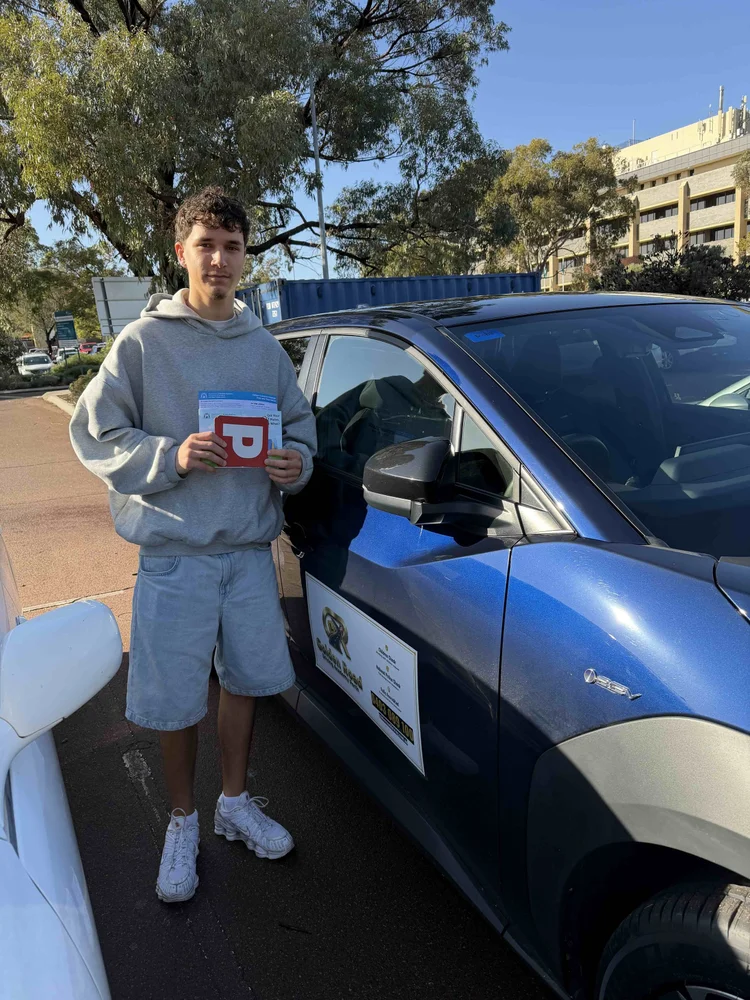
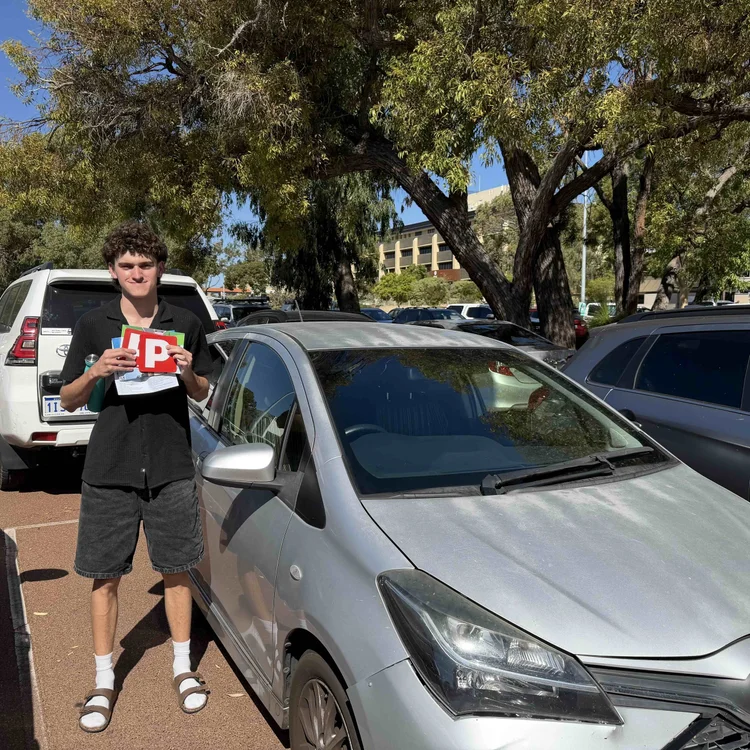
Golden Road learners on their P plates
★★★★★
“Paul assessed my driving and pointed out some bad habits I needed to fix in order to pass … at that point I felt confident enough to attempt the road test.”
Ishe Makumbe
★★★★★
“Paul is very keen and honest about what you need to work on and helps you get there. Provides a cool but detailed respectful interaction which helps you progress without pressure.”
Stefan Ramroop
★★★★★
“Paul was a fantastic driving instructor — calm, patient, and very clear in his explanations. He made every lesson feel comfortable and confidence-building.”
Mohammad Alsalous
Skills for life
Ready to put the theory on the road?
Automatic driving lessons across Perth’s northern suburbs, with home pick-up and a DoT-accredited instructor. Bring this guide to your first lesson and we’ll start where it ends.
This guide is general information to help you learn, not legal advice. Road rules and Transport WA requirements can change, so always check the latest on Transport WA.